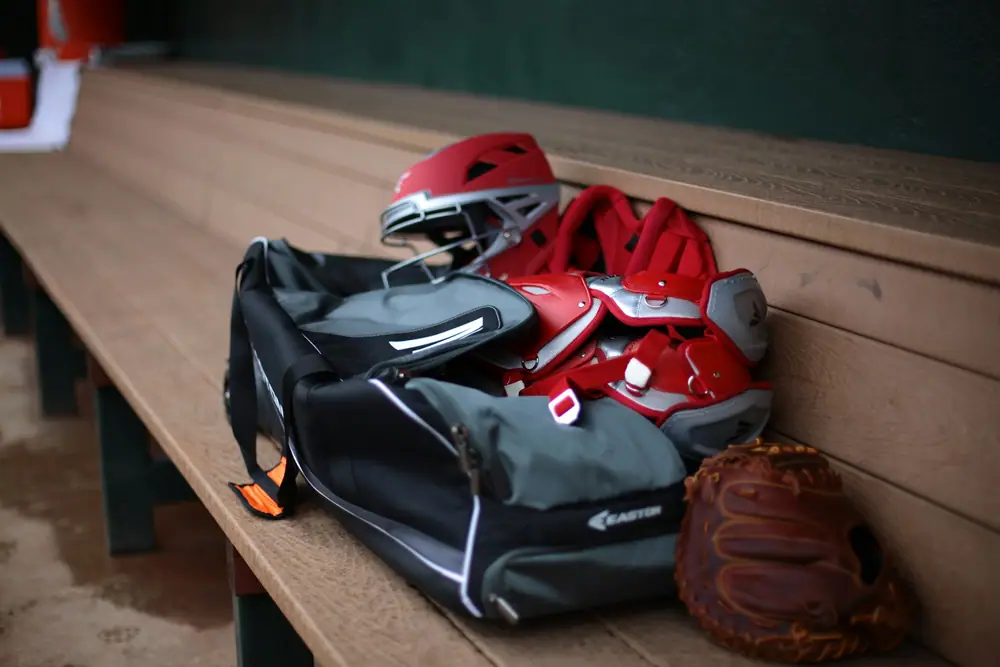
Every family with a hockey, football or martial arts player knows the smell. It builds up in bags, pads and gloves, spreads to the car and eventually to the hallway. The cause is simple: sweat plus warmth plus no airflow. The fix is also simple, though it takes consistency.
Why gear smells
Sweat itself does not smell much. Odor comes from bacteria breaking it down in warm, damp conditions, and a zipped sports bag in a car trunk is close to ideal for them. Foam padding and synthetic fabrics hold on to moisture, so without drying they stay damp between sessions.
Air everything after every use
The most important habit is unpacking the bag as soon as you get home. Every time. Hang pads, gloves and helmets on open hooks or a drying rack where air moves, ideally with a fan. Open the bag fully and let it air too.
- Pull gloves open and stand them cuff-down so air can get in.
- Loosen straps and open pads so inner surfaces are exposed.
- Remove helmet liners and pads where they are designed to come out.
- Take shoe and skate insoles out.
A dedicated airing rack or a row of pegboard hooks by the door turns "unpack the bag" from a chore into a ten-second habit. See the pegboard gear wall for layout ideas.
Washing pads and bags
Many pads and bags can be washed, but always check the maker's care label first. Where machine washing is allowed, fasten straps and Velcro, use a gentle cycle with cool or warm water and mild detergent, and skip fabric softener, which can leave residue in technical fabrics. Front-load machines are generally gentler on bulky pads.
For items that should not go in a machine, such as some helmets and gloves, hand wash with a mild soap solution, rinse and air-dry. Leather gloves need leather-safe care.
Unpack the bag every time. It is the habit that does the most work.
Drying
Air-dry pads rather than tumble-drying unless the label says otherwise, since heat can warp plastics and break down foam. A fan speeds things up. Everything should be fully dry before it goes back in the bag.
| Item | After each use | Periodically |
|---|---|---|
| Bag | Empty and open fully | Wash or wipe inside per label |
| Pads and guards | Hang on hooks with airflow | Wash per label |
| Gloves | Open and stand cuff-down | Hand wash; leather-safe care |
| Helmet | Liner out if removable, air-dry | Wipe shell and pads |
| Base layers | Straight to laundry | — |
Storage habits
Store gear on hooks or an open rack, not zipped in the bag. Keep it somewhere with airflow rather than a closed closet or car trunk. Wash base layers after every use, and keep a spare set so a player is never tempted to wear them twice.
Extra help
Baking soda sprinkled in an empty bag overnight and vacuumed out can help absorb odor. Sports-gear sprays exist too; follow directions and test on a small area. Neither replaces airing and washing, but they can help between washes.
Getting kids involved
Young players can learn this routine quickly if the setup is easy. Put hooks at their height, label spots with pictures, and make unpacking the bag part of the way home, like taking shoes off. Once the habit sticks, the smell usually goes with it.
The car problem
Many sports bags spend more time in a car than anywhere else. A hot trunk is the worst place for damp pads, so make the car a transport space only. If you go straight from practice to somewhere else, open the bag and crack a window, or keep pads in an open crate instead of a zipped bag. Wipe the trunk mat now and then, since it absorbs odor from everything that sits on it.
When to replace
Sometimes padding reaches the point where washing no longer helps: foam has broken down, liners are torn, or the smell returns within a day. Protective gear also wears out over time and should be checked against the manufacturer's guidance on condition and lifespan. If a helmet or pad is damaged or no longer fits, replace it, and pass on outgrown gear in good condition to another player.
Give this gear a proper home
Six storage plans with materials lists, step timelines and printable checklists.
See the plans