Overview
Balls are the most free-range objects in any home. They roll out of bins, wedge themselves behind tires and end up on every shelf that has a lip. Rackets, bats and sticks bring the opposite problem: they are long, they lean, and they slide over like dominoes when somebody grabs the one at the back.
A good field-and-court zone solves both. It gives round things a container they can be tossed into and grabbed from with one hand, and it gives long things a rail or slot so each one stands on its own. Here is how to build one that survives a household of kids and a car pulling in and out every day.
Materials
Quantities below are a starting point for a typical space. Adjust them once you have laid your gear out and measured the wall or room.
| Item | Spec to look for | Qty | Notes |
|---|---|---|---|
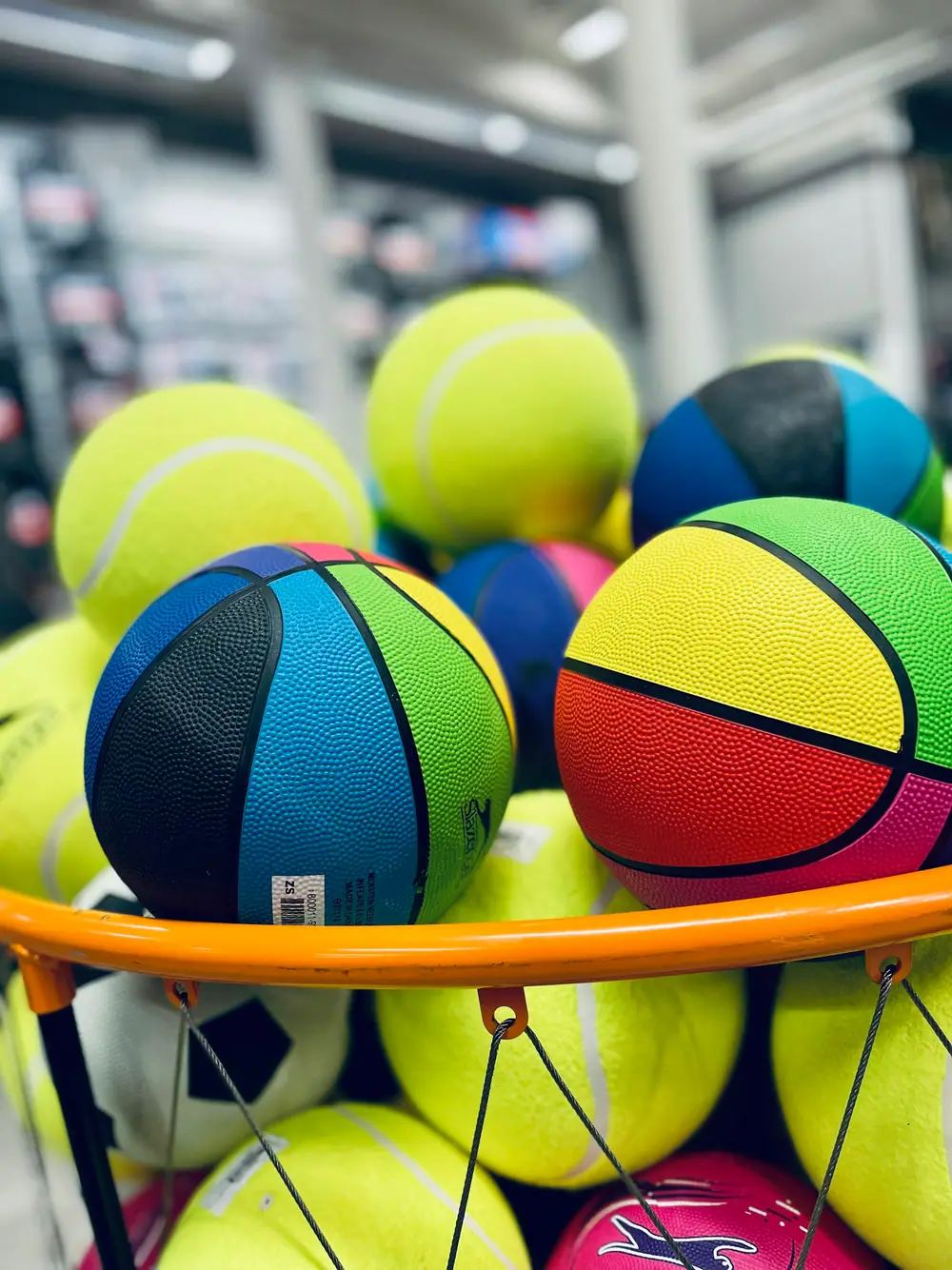
| Bungee ball cage | Wall-mounted frame with elastic cords | 1–2 | Balls push through, stay put, and are easy to pull out |
| Rolling ball cart or tall bin | Open wire or netting, with wheels if possible | 1 | For team sets and practice bags of balls |
| Racket rail | Wall rail with padded hooks or slots | 1 | Hang tennis, pickleball and badminton rackets by the throat |
| Bat and stick rack | Slot rack or vertical tube holder | 1 | Keeps bats, hockey and lacrosse sticks upright |
| Small ball baskets | Pegboard or wall baskets | 2–3 | Tennis balls, golf balls, shuttlecocks |
| Heavy-duty hooks | Screwed to studs | 3–6 | Team bags, ball nets, pinnies |
| Inflation kit | Pump, needle set and gauge | 1 | Store beside the balls, not in a drawer |
| Labels | Per sport or per player | Set | Helps kids reset the zone themselves |
Layout tips
Pick a wall that is close to the door you use to leave for practice, and keep the zone at kid height if younger players are expected to use it. Put the bungee ball cage or ball bin at the low end so balls are dropped in, never lifted. Mount the racket rail at about chest height of the tallest regular user, with enough space between hooks that one racket can come off without knocking the next.
Bats and sticks go in a floor-standing slot rack or a vertical holder at the end of the run, because they are the longest items and look least tidy in the middle. Hang team bags on heavy hooks above the balls, so the whole setup for one sport lines up vertically: bag, then rackets or sticks, then balls. That vertical grouping is what makes a quick grab-and-go possible.
Finally, put the pump and needles in a small basket at eye height. Soft balls are one of the most common reasons a practice starts late, and a visible pump solves that.
Step timeline
Empty and sort
Gather every ball, racket, bat and stick. Recycle cracked frames, flat balls that will not hold air and anything outgrown.
Group by sport
Make one pile per sport. Count what is left so you size the cage and rail correctly.
Mount the rail and hooks
Screw the racket rail and bag hooks into studs, level and at the heights you planned.
Fit the ball cage
Attach the bungee cage low on the wall, or position the ball cart where it will not block the car door.
Stand up long gear
Place the bat and stick rack at the end of the zone, handles up for easy grabbing.
Add the inflation station
Hang the pump and a pin container, and add a short note of recommended pressures from each ball's markings.
Label and hand over
Label each sport's section. Show everyone in the house where things go; the zone only works if they use it.
Options compared
| Option | Best for | Strengths | Watch-outs |
|---|---|---|---|
| Bungee cage | Basketballs, soccer and volleyballs | Balls cannot roll away; one-hand access | Cords stretch over time; replace them as they loosen |
| Netted ball cart | Teams, coaches, large sets | Mobile, holds many balls | Takes floor space |
| Open bin or barrel | Mixed sizes, small kids | Toss-in simple | Small balls sink to the bottom |
| Wall baskets | Tennis, golf, pickleball balls | Keeps small balls visible | Limited capacity |
| Over-door organizer | Apartments, closets | No drilling | Only for light items |
Do and don't
Do
- Store balls low and rackets at chest height
- Keep a pump next to the balls
- Hang rackets by the throat, not the strings
- Group vertically by sport
Don't
- Leave rackets in a hot car or sunny window
- Stack rackets under heavy items
- Store balls fully deflated for months
- Put long bats in the middle of the zone
Checklist
Ball and Racket Racks checklist
Sort
- Every ball, racket, bat and stick gathered
- Damaged and outgrown items removed
- Gear grouped by sport
- Counts noted for sizing
Build
- Racket rail level on studs
- Bag hooks mounted above balls
- Ball cage or cart placed low
- Bat and stick rack at the zone end
Keep it working
- Pump and needles visible
- Sport labels added
- Monthly reset of loose balls
- Rackets checked for cracks each season